NewsPharmaceutical manufacturing quality

Particle Counting in Injectable Solutions

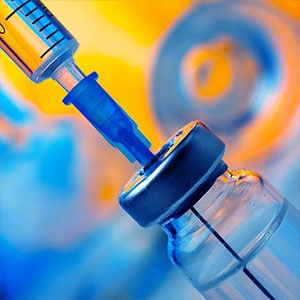
Requirements stated in USP <788>, EP 5.1 and JP 17 demand that injectable solutions are effectively monitored for microcontamination, specifically non-soluble particulates. Potential sources of particle contamination include the manufacturing environment, personnel, and packaging components. In this blog, we examine the history of particulate control in injectables and counting solutions that meet standards set by pharmacopoeias.

Newsparticle counter lasers

Long Lasting Particle Counter Lasers

Particle counters use lasers which provide intense light to count very small particles. All lasers have a finite lifetime, but that lifetime can be extended or shortened based on how the laser is used. Your cost of ownership will decrease if the laser lasts longer.

NewsUSP 788 vs 1788

Counting Efficiency and Resolution in Optical Particle Counters

Most Optical Particle Counters use a light source to illuminate a sample volume, an optical system to collect the particle’s scattered light pulse, a process to convert the scattered light into an electrical signal, and electronics to correlate particle size with the scattered light pulse. While the specific design varies greatly between manufacturers (and while the instruments vary with different sensitivity and flow rates), the fundamental principles of optical particle counter operation are quite similar across the industry.

NewsParticle Contamination in High-Purity Process Chemicals

Refractive Index Effects on Particle Size Measurement in Liquid Media by Optical Extinction

When monitoring larger size particles, extinction optical particle counting is the typical method used for accurate results. The refractive index difference between microcontaminants and the liquid media being measured can be explored in an effort to determine the related extinction response. At submicron particle ranges, the index contract between a particle and the liquid media is important. The interplay of refractive index contrast and particle size analysis in liquids can be explored and described with the aid of Mie theory.

Get the latest updates, insights, and resources straight to your inbox

Particle Measuring Systems logo
Privacy Overview

This website uses cookies so that we can provide you with the best user experience possible. Cookie information is stored in your browser and performs functions such as recognising you when you return to our website and helping our team to understand which sections of the website you find most interesting and useful.

How can I help you today?