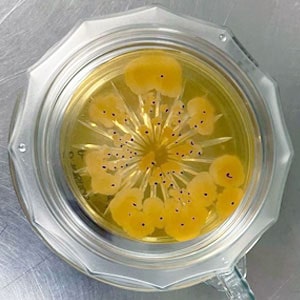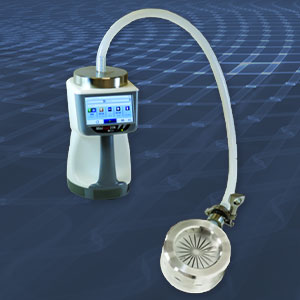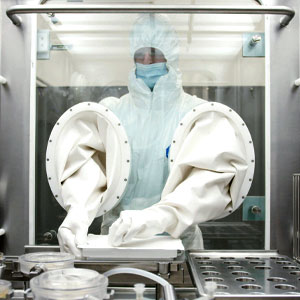
HCT/P Environmental Monitoring featured image
Human Cell, Tissue, And Cellular And Tissue-Based Products (Hct/P) Environmental Monitoring Requirements: 21 CFR 1271

The Food and Drug Administration (FDA) requires human cell, tissue, and cellular and tissue-based product establishments to follow the current Good Tissue Practice (GTP), which governs the methods used in, and the facilities and controls used for, the manufacture of human tissue and cellular and tissue-based products. The
following regulation is to be enforced as of May 25, 2005: 21 CFR 1271—Human Cells, Tissues, and Cellular and Tissue-Based Products 21 CFR 1271.195 Environmental control and monitoring Section 1271 requires facilities to establish and maintain procedures to adequately control and monitor environmental conditions and to provide proper conditions for operations. The regulations were created to improve protection of the public health. Section 1271.195 specifies the monitoring parameters required. 

Particle Contamination in High-Purity Process Chemicals
Filtered Seawater Particle Counts for Injection into Oil Reserves

Seawater injection is a secondary recovery technique used in oil reservoirs to replace extracted oil and maintain well pressure. Oil reservoirs are typically found within the small pores of sedimentary rock formations, so it is imperative that the injected seawater does not contain suspended particle matter that can clog these pores and hinder oil recovery. Since untreated seawater contains significant quantities of suspended particle matter it is generally filtered prior to injection into oil reservoirs. Optical particle counters offer an accurate and reliable solution to quantify particle concentrations in filtered seawater used for injection.

Data Analysis to identify Particles in Chemicals
Particle Contamination in Chemical Distribution Systems

Particle contamination in chemical distribution systems can be difficult to find, but costly to yield when missed.

Advanced data analysis techniques can be implemented to quantitatively assess particle contamination data in state-of-the-art chemical distribution systems. Through examining the distribution of the rate of particle detection compared to Poisson’s distribution, it is possible to determine if particle variations are random or systematic and allow for the focus of improvement efforts to reduce particle levels with time. By analyzing the particle contamination data in the frequency domain via Fourier transform analyses, periodic cycles of contamination can be identified with the goal of associating contamination events with activities within the chemical delivery system.

Get the latest updates, insights, and resources straight to your inbox

Particle Measuring Systems logo
Privacy Overview

This website uses cookies so that we can provide you with the best user experience possible. Cookie information is stored in your browser and performs functions such as recognising you when you return to our website and helping our team to understand which sections of the website you find most interesting and useful.

How can I help you today?