Particle Loss in Tubing: An Analysis
In discussing acceptable particle losses in tubing, there are many factors. Transportation of particles in tubing between a sample inlet and the optics of particle counters has at many times been at the forefront of discussion regarding the truth of readings. When the validation implications of losses due to various forces are reviewed, the certainty of the result is always in question. So what are these forces, what are the losses, and what are the acceptable results? This paper addresses these issues to allow for a better understanding of the problem.
Particle transport losses can affect monitoring accuracy and product quality. This paper explains how to quantify losses and validate performance, and examines the forces and mechanisms acting on particles, including:
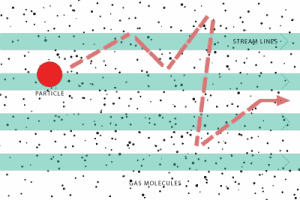 Stokes number
- Drag coefficient
- Relaxation time
- Deposition velocity
- Viscous force
- Brownian motion
- Gravitational force
- Electrostatic forces
- Diffusion forces
- Thermophoretic forces
Isokinetic Sampling
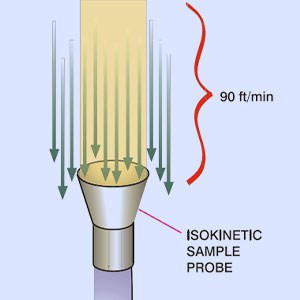 In laminar flow environments, or in ducts leading to a filter, air moves unidirectionally and must be sampled without bias to particle distribution. This is achieved through isokinetic sampling, where inlet velocity matches airflow velocity. Velocity mismatches cause sampling errors that increase with particle size, though effects are minimal below 1–2 μm. Per FS 209E, errors remain under 5% for small particles using ≥ 2 mm probes, even with velocity differences. For particles > 5 μm, isokinetic sampling is required. A dedicated calculator can be used to size probes and assess errors for non‑standard configurations.
Learn more… Complete the form to download the full paper.

Get the experts in Particle Measuring Systems’ Advisory team to do your risk assessment for tubing particle loss.