Particle Contamination in Chemical Distribution Systems
Particle contamination in chemical distribution systems is notoriously difficult to detect, and, when missed, the cost can be significant. As limits shrink to the nanoparticle level, traditional approaches fall short, making data-driven analysis essential for uncovering hidden contamination, measuring stability, and tracking improvements over time. Download this paper from Particle Measuring Systems to learn how to apply quantitative methods for nanoparticle detection, featuring real-world use of the Chem 20™ and Ultra DI® 20 liquid particle counters, along with practical guidance on using Deviation from Poisson (DFP) to evaluate and maintain system stability.
By applying advanced data analysis to outputs of liquid particle counters regarding contamination in chemical distribution systems, contamination sources can be isolated and quantified, providing a clear framework for tracking system performance and assessing mitigation effectiveness.
One effective strategy is to analyze the rate of particle detection against a Poisson distribution. In the absence of systematic contamination, particle detection events should follow Poisson statistics. Deviations from this expected distribution—referred to as Deviation from Poisson (DFP)—serve as a key indicator of contamination events and system instability.
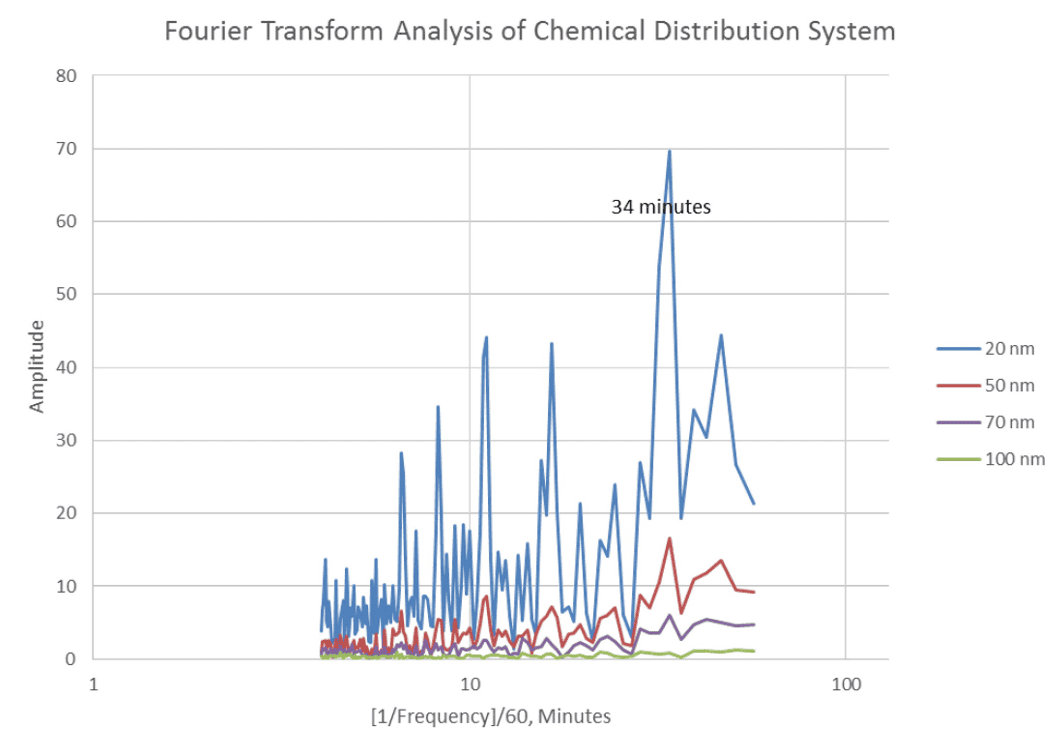
Additionally, applying Fast Fourier Transform (FFT) analysis reveals contamination patterns in the frequency domain. This enables detection of periodic contamination cycles, which can then be correlated with specific operational activities within the chemical delivery system.
In this paper, you’ll learn:
-
How to apply quantitative mathematical methods for nanoparticle contamination detection
-
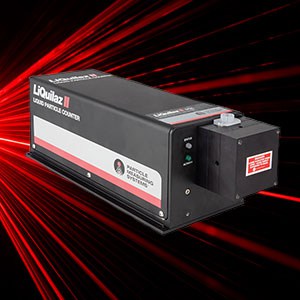
The experimental use of the Chem 20™ Chemical Particle Counter and Ultra DI® 20 Liquid Particle Counter
-
How to use Deviation from Poisson (DFP) as a metric for system stability