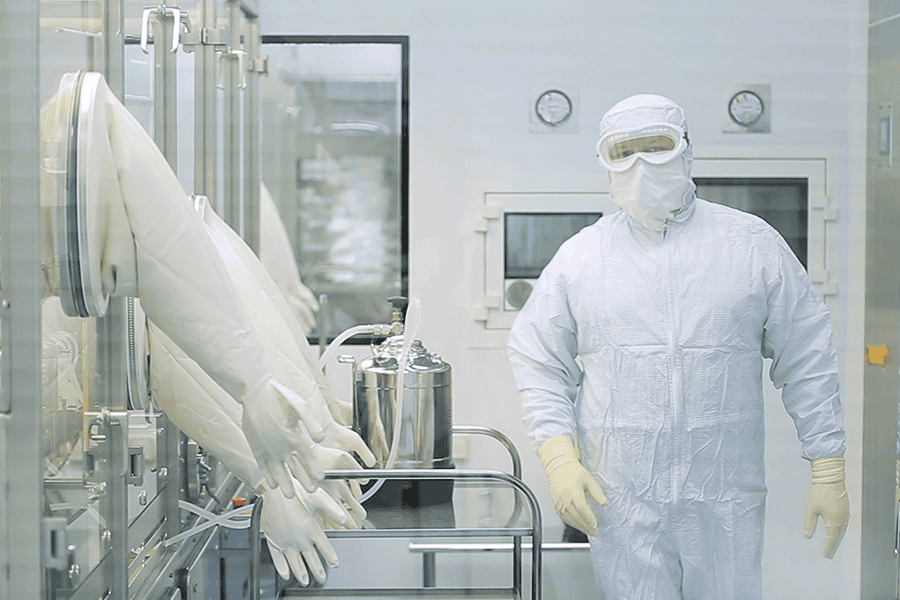
Practical Considerations for Aseptic Gowning in Contamination Control Strategies
In this webinar we examine the main personnel-related factors that could lead to particle/microbial contamination risks of the product and outline practical measures that can mitigate these risks.
Fill in the form to access the on demand webinar
Sterile product manufacturing is a critical process that requires the application of stringent controls and compliance with specific requirements to minimize the risks of contamination. Personnel introduce particles and microbes shed from skin, hair, and clothing. A comprehensive Contamination Control Strategy (CCS) must therefore evaluate all factors that could allow personnel to introduce contaminants into the process.
As highlighted in the most recent version of EU GMP Annex 1 (2022), a CCS should be implemented to identify and analyze the overall risk of contamination in the facility and to propose and review appropriate mitigating actions (e.g., corrective and/or preventive action plans). Within a pharmaceutical CCS, all potential sources of contamination must be considered, with personnel consistently recognized as one of the most significant contributors to risk.
Key “personnel” factors that can pose microbiological or particulate contamination risks include, at minimum:
- Gowning
- Qualification and training
- Flow
- Intervention
- Personnel monitoring
Who should attend:
- QA/QC Personnel
- Project Managers
- Production Managers and Supervisors
- Compliance Officer
- Regulatory Affair Specialist
- Environmental Monitoring Specialist
- Auditors
- Process Engineers
- Manufacturing Technicians working in sterile environments
- Validation Engineers
- Operation Managers
- Facility Managers
Speakers
Rosa Laronga
Advisory Specialist

Rosa Laronga is a Doctor in Pharmacy with a solid scientific background developed over several years of experience in pharmaceutical companies. She started her career in Quality, overseeing production activities. Later she took on roles in Quality Assurance and Sterility Assurance, where she gained expertise in environmental monitoring, deviation management, and the preparation of technical documentation. Now, at PMS, as an Advisory Specialist, she supports pharmaceutical companies in improving their sterility assurance approaches through the implementation of contamination control strategies, environmental monitoring risk assessments and training on sterility assurance topic