
Why Regular Calibration and Service of Particle Counters Protect Clean Manufacturing
Particle counter service and calibration is important to support clean manufacturing. Particle counters are more than monitoring tools—they are guardians of process control. They provide the evidence manufacturers rely on to demonstrate environmental stability, product protection, and regulatory compliance. But these instruments only protect what they can accurately see. Without regular particle counter calibration and professional servicing, particle counters themselves can become a source of risk rather than assurance.
As cleanrooms increasingly face complex challenges—such as intrinsic product particles during continuous monitoring requirements under EU GMP Annex 1—the accuracy, responsiveness, and reliability of particle counters have never been more critical.
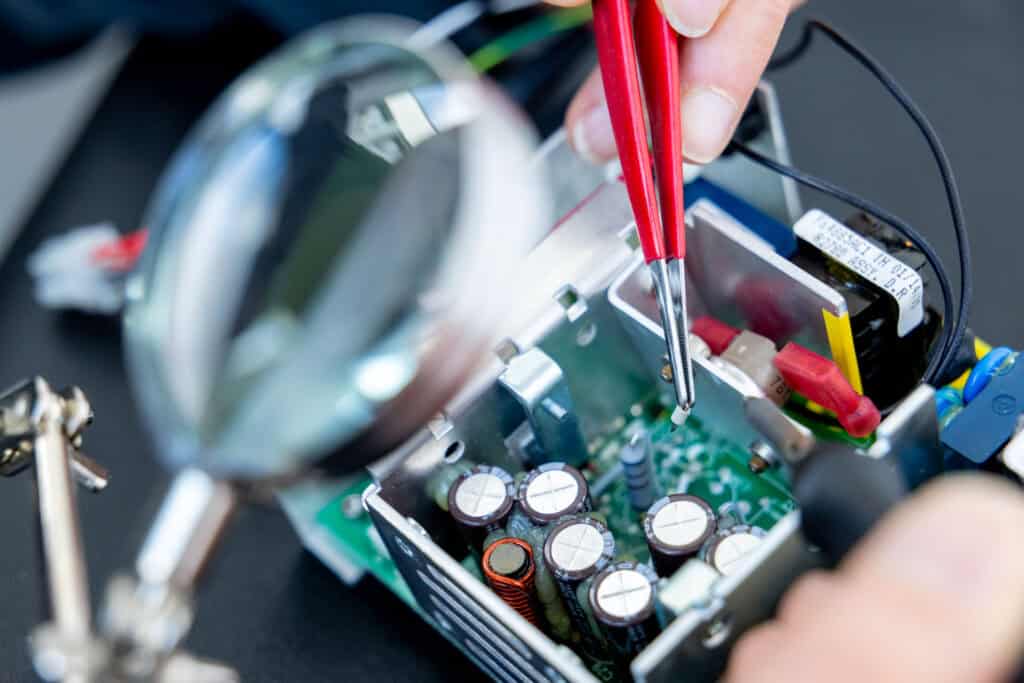
Particle Data Is Only as Trustworthy as the Instrument Behind It
Regulators expect scientific justification for how particle data is collected, interpreted, and acted upon. That justification depends on having confidence in the monitoring system itself. A particle counter that is well-calibrated, well-serviced enables manufacturers to:
• Differentiate intrinsic product particles from extrinsic contamination
• Defend monitoring strategies during audits
• Establish reliable baselines and recovery times
• Avoid false alarms that erode trust in the data
When instruments are neglected, even the strongest contamination control strategy can be undermined by questionable data quality.
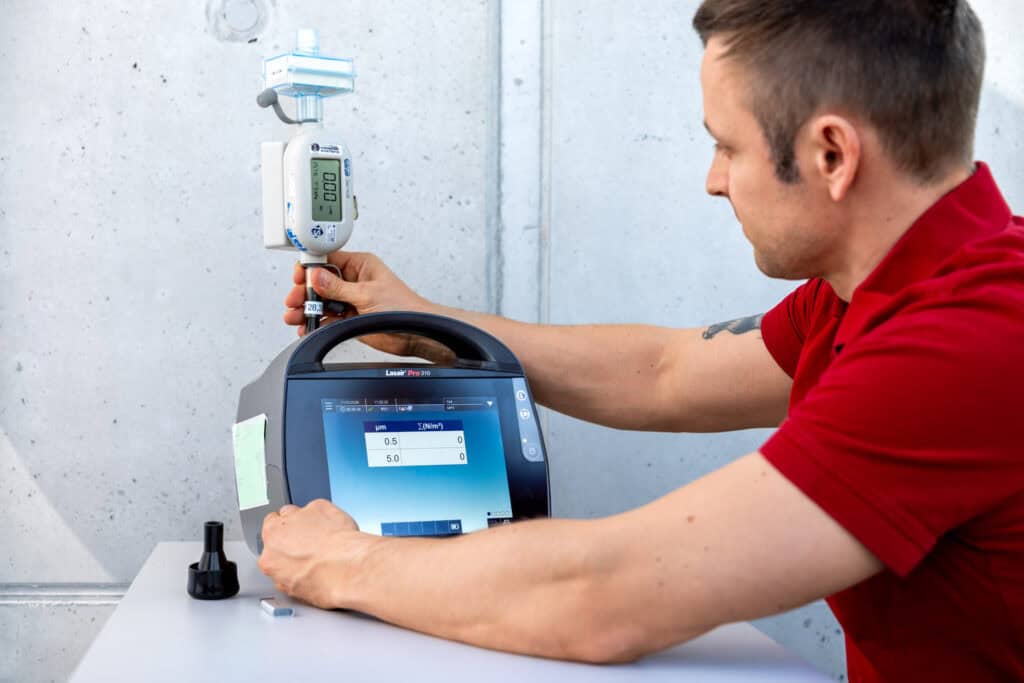
Calibration Ensures Confidence at Critical Particle Sizes
Continuous particle monitoring is required at defined particle sizes because those sizes correlate with contamination risk in aseptic processing. Particle counter calibration is what ensures the counter accurately detects and sizes particles where regulatory scrutiny is highest.
Over time, optics can drift, flow rates can shift, and sensor response can change—all without obvious external warning. Calibration:
- Verifies particle sizing accuracy
- Confirms flow rate integrity
- Ensures compliance with ISO and GMP expectations
- Protects trending data from silent drift
Without regular particle counter calibration, deviations may appear to be environmental problems when they are actually instrumentation errors—leading to unnecessary investigations or, worse, missed contamination events.

Service Protects Counters from the Realities of Manufacturing and Production
Manufacturing operations introduce uniquely harsh conditions for particle counters. High particle loads or chemical/environmental residues can contaminate optics and sampling lines, sometimes requiring extended purging or full service intervention to restore performance.
Routine professional servicing:
- Removes accumulated particle residue from optics and tubing
- Restores instrument response following high-load exposure
- Identifies wear before failure occurs
- Extends instrument lifespan in demanding environments
For consistent operation manufacturers can trust, service is not optional maintenance—it is a necessary reset that preserves the counter’s ability to distinguish normal, expected particle behavior from true contamination risks.
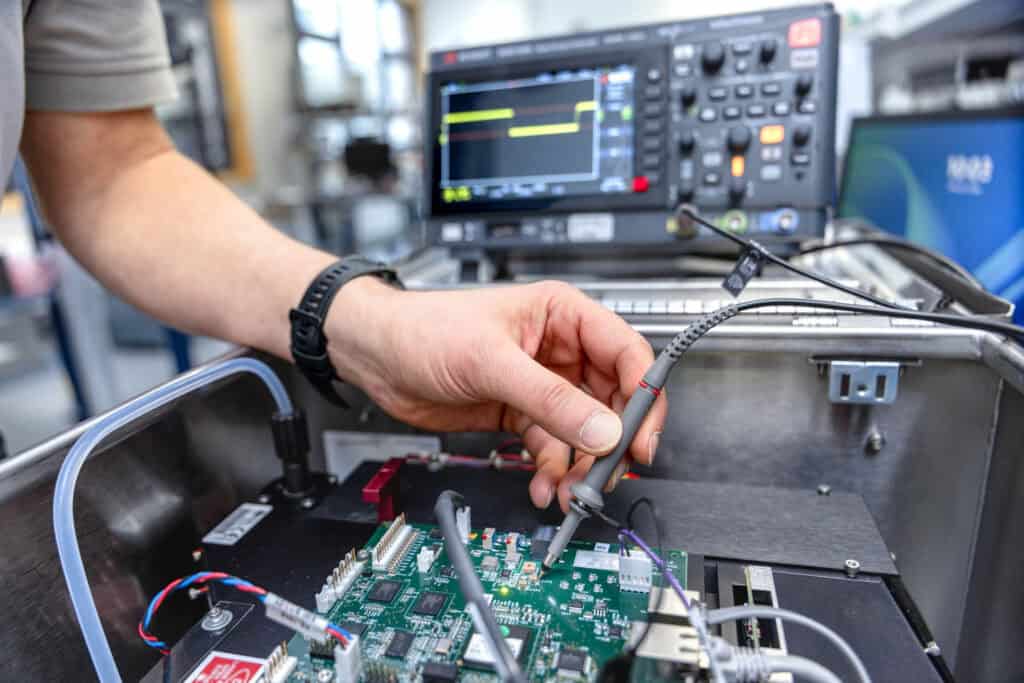
Calibration and Service Are Part of Contamination Control
Particle counters play a direct role in demonstrating environmental control. If their accuracy is uncertain, the contamination control strategy is weakened at its foundation.
Regular calibration and service:
- Protect data integrity
- Support audit readiness
- Reduce unnecessary investigations
- Ensure monitoring systems reflect the true state of the clean environment
In clean manufacturing, vigilance is not just about watching particles—it’s about ensuring the tools doing the watching are capable, proven, and ready.
PMS is your Partner for Calibration and Maintenance
PMS continues to maintain its strong commitment to the highest compliance standards for our calibrations. The PMS laboratory is accredited in accordance with the recognized International Standard ISO/IEC 17025:2017
General requirements for the competence of testing and calibration laboratories and meets R205 – Specific Requirements: Calibration Laboratory Accreditation Program. The accreditation demonstrates technical competence for its defined scope and the operation of a laboratory quality management system.