Aseptic Environment Monitoring: Manage Your Risk
An effective contamination control strategy starts with understanding risk. This expert interview discusses how risk assessment supports aseptic environmental monitoring and helps meet auditor expectations. Topics include applying FMEA to microbial monitoring, evaluating and measuring risk, and identifying practical actions to reduce or eliminate contamination. The discussion also covers how ongoing review and improved control strategies strengthen sterility assurance along with additional information on risk identification, control, and evaluation.
Risk assessment consists of the identification of hazards and the analysis and evaluation of risks associated with exposure to those hazards. The risk assessment of particle and microbiological contamination of the product and its components should take into account the following aspects:
- Highest risk of contamination of the product and its components (study of the airflows and exhaust grid)
- Personnel operations
- Material and personnel flows
- Cleaning and sanitizing of environments and equipment.
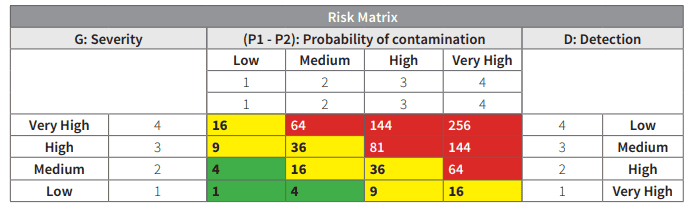
The following matrix is often used to define and evaluate risk. Following an analysis of this chart (discussed further in the paper), manufacturere]s proceed to the next step which involves risk control.
Beyond defining risk, effective sterility assurance requires the right tools, expertise, and ongoing support. Particle Measuring Systems partners with pharmaceutical manufacturers to strengthen contamination control through comprehensive analysis and robust documentation, while also supporting sterility education and implementation.
This paper highlights key topics across sterility assurance, from process design evaluation and risk analysis to audit readiness and quality response, while also showing how Particle Measuring Systems services help teams address deviations, navigate regulatory expectations, and maintain confidence in their contamination control strategy.
Learn more… Complete the form to download the full paper.